

By Muhammad Amaan
The Federal Government of Nigeria has directed states with poor maternal health indicators and rising numbers of zero-dose children to develop costed recovery plans in their 2027 operational plans.
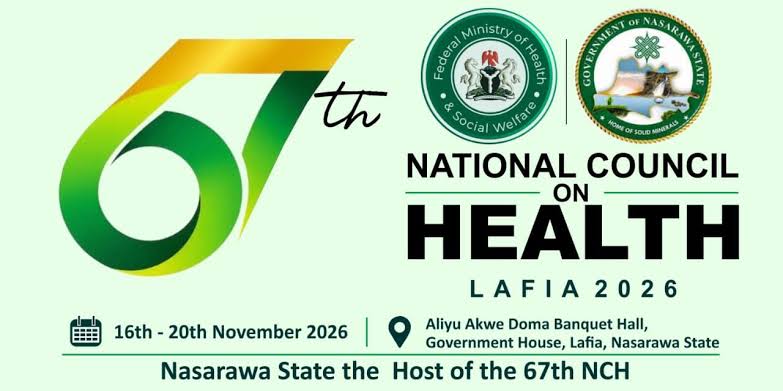
The Minister of State for Health and Social Welfare, Dr Iziaq Salako, gave the directive on Thursday at the opening of the 67th Regular Session of the National Council on Health (NCH) in Lafia, Nasarawa State.
The meeting is themed: “From Commitments to Results: Delivering Quality and Equitable Healthcare for All Nigerians.
“Each state below 50 per cent on four antenatal visits or with rising zero dose children must provide a costed recovery plan in its 2027 operational plan,” he said.
Dr Salako urged the council to ensure that every memorandum considered had clear alignment with the Federal Government’s health transformation agenda, an assigned implementer, a timeline and a mechanism for verifying completion.
He said the implementation of council resolutions should increase from 75 per cent to at least 90 per cent, with progress tracked at the next Joint Annual Review.
The minister also called for the expansion of Basic Emergency Obstetric and Newborn Care (BEmONC) facilities and the Maternal and Neonatal Mortality Reduction Innovation Initiative (MAMII) to all 774 local government areas from 2027.
He urged states to accelerate funding towards the 15 per cent Abuja Declaration target, ensure timely budget releases and full implementation, while developing costed plans for recruiting, absorbing and retaining health workers.
Salako said thousands of primary healthcare centres had been revitalised, health financing expanded, frontline health workers recruited and trained, while digital health, local pharmaceutical manufacturing and health insurance coverage were improving.
He said sustaining the gains required reliable power, essential medicines, equipment, adequate staffing and accountable financing that reached communities.
The Nasarawa State Commissioner for Health, Dr Gaza Gwamna, said the state had increased health insurance enrolment from zero in 2019 to nearly 300,000, representing about 8.5 per cent of its population.
He said the state had also invested in health infrastructure across primary, secondary and tertiary facilities and established its first drug supply agency.
Dr Gwamna added that a private health facility regulatory agency was established about six months ago to address poor service quality and quackery, partly associated with healthcare developments around the Federal Capital Territory (FCT).
“We were deliberate because of the issues we continue to have with the quality of service we receive, especially with the spillover of the development that is happening at the FCT,” he said.
Gwamna said Nasarawa was among the first states to adopt MAMII, which had helped improve maternal health in five local government areas bordering the FCT.
He said the state’s health sector priority was to improve both the number of years people lived and the quality of those years through healthier living.
The World Health Organization (WHO) Country Representative, Dr Pavel Ursu, urged stakeholders to ensure that council resolutions translated into adequately funded and measurable results.
He said sustainable health development required political commitment, domestic financing, effective stewardship and broad engagement.
Dr Ursu emphasised the need to sustain recent health sector gains and improve access to healthcare for vulnerable and underserved populations.
“Let’s ensure that our success is measured not only by policies we adopt, by projects that we inaugurate, but by resources translated into services.
“By reducing the gaps between states and the lives saved, inequality reduced, quality of care improved, and the wellbeing of every Nigerian,” Ursu said.
The Head of Health Civil Society Organisations, Dr Muhammad Lecky, called for citizen participation and accountability in implementing health sector reforms.
“As CSOs, we reaffirm our commitment to constructive engagement, effective citizen participation all the way to the grassroots, policy advocacy, and accountability in advancing the ongoing health sector reform,” he said.
Health Reporters Newspaper reports that the 67th NCH began with technical sessions on Monday.


