

By Muhammad Amaan
The Coordinating Minister of Health and Social Welfare, Prof. Muhammad Ali Pate, has commended state governments for increasing their health budgets from N1.97 trillion in 2023 to more than N3.3 trillion in 2026.
Pate described the increase as a boost to domestic health financing, urging governments to sustain investments and strengthen accountability in the sector.
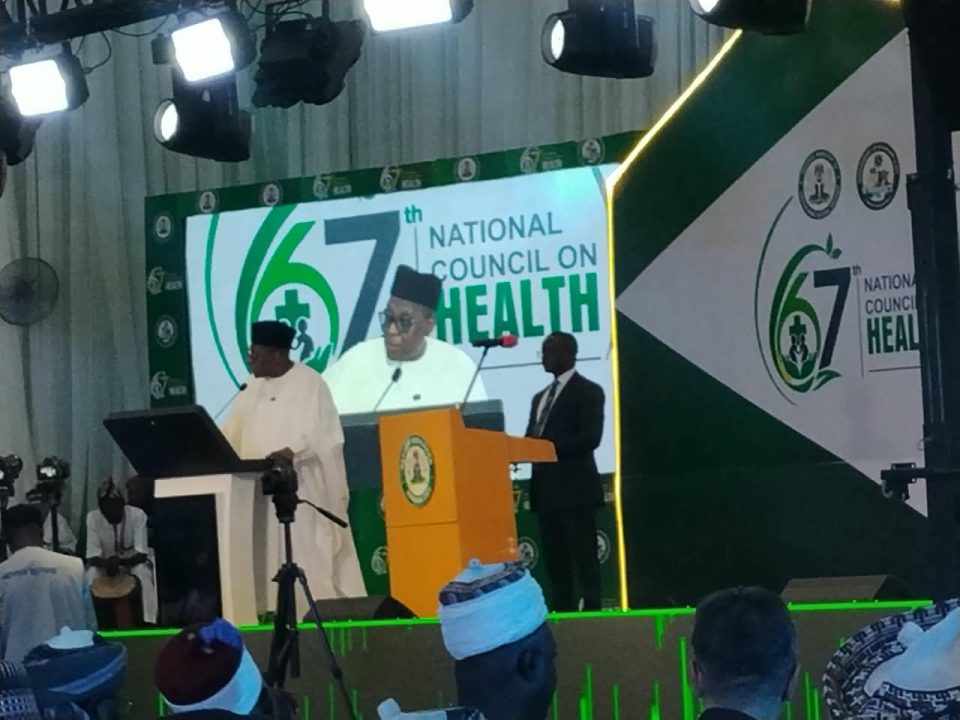
He gave the commendation on Thursday at the opening ceremony of the 67th Regular Session of the National Council on Health (NCH) in Lafia, Nasarawa State.
The meeting is themed: “From Commitments to Results: Delivering Quality and Equitable Healthcare for All Nigerians.”
Prof. Pate said increased funding was accompanied by efforts to strengthen local production of medicines and essential health commodities.
“10 factories and production lines have been commissioned, six of them this year alone, producing medicines, rapid diagnostic test kits, mosquito nets and medical oxygen,” he said.
He said Nigerian manufacturers had also received more than N24 billion in tax waivers under the Presidential Executive Order signed in June 2024.
Pate said the federal and state governments had recorded progress under the Nigeria Health Sector Renewal Investment Initiative, with 41 commitments achieved and 12 of 13 health indicators improving over the past three years.
He said skilled deliveries in facilities supported by the Basic Health Care Provision Fund (BHCPF) increased from 4.8 million in 2023 to nearly eight million by mid-2026, while fourth antenatal visits rose from six million to 8.7 million.
He added that health insurance coverage expanded from 16 million to nearly 24 million Nigerians, while almost 20,000 skilled birth attendants were recruited across 22 states.
The minister, however, urged governments to strengthen accountability in implementing health sector resolutions, noting that only 412 of 740 expected reports on the 20 resolutions adopted at the previous council were submitted.
“All 36 States and the FCT submitted returns, but only 412 of the 740 expected reports came in, or 56 per cent. No state reported on all 20 resolutions,” he said.
Prof. Pate urged states to assign responsibilities, timelines and measurable targets to resolutions, while submitting quarterly reports for tracking and independent verification.
He also called for increased health budgets, timely releases, expanded insurance coverage for vulnerable populations and sustained investment in primary healthcare.
The minister said households still carried the largest share of health expenditure, while government allocations remained below the Abuja Declaration benchmark of 15 per cent.
He urged states to prioritise underserved communities, noting that skilled health workers attended fewer than four in 10 rural births, compared with nearly seven in 10 urban births.
While declaring the council open, Governor Abdullahi Sule of Nasarawa State said the state remained committed to expanding health insurance, strengthening primary healthcare and improving health infrastructure.
Represented by the Deputy Governor, Dr Emmanuel Akabe, Sule said the state had enrolled poor and vulnerable residents in its health insurance scheme to improve access to affordable healthcare.
He said the state had also established the Nasarawa State Drugs and Supplies Management Agency to address commodity supply challenges, price disparities and the circulation of substandard medicines.
The governor said the agency was rated by the Federal Ministry of Health and Social Welfare in 2024 as maturing at an accelerating pace and ready to manage public health commodities.
He added that the upgrading of General Hospital, Wamba, to a specialist hospital was part of efforts to expand access to tertiary healthcare across the state’s zones.
The Emir of Shonga, Alhaji Haliru Yahaya, commended the health sector reforms, particularly the coordination of federal and state governments under a common plan, budget and accountability framework.
He said previous efforts were hampered by poor coordination, with state officials often unable to secure approval for plans and projects.
Emir Yahaya said the unified approach had helped improve health sector performance but warned that declining development assistance and weak discipline could undermine progress.
“Discipline is the issue here. If we get our act together, get more funding, better funding, use our funding, and then with discipline in our approach, things will begin to happen,” he said.
He also urged health authorities to engage traditional institutions and community leaders adequately when implementing programmes, warning that poor communication could undermine projects.
The monarch said community sensitisation and explaining the benefits of health insurance to residents were important to sustaining enrolment and participation.


