

By Muhammad Amaan
The World Health Organization (WHO) has validated Eritrea’s elimination of trachoma as a public health problem, making it Africa’s 11th country and the world’s 34th to achieve the milestone to date.
WHO Director-General, Dr Tedros Ghebreyesus congratulated Eritrea’s government and people in a statement on Monday, describing the achievement as a victory for affected communities after two decades of sustained national efforts.
“The milestone demonstrated what sustained national commitment could achieve in eliminating neglected tropical diseases and protecting vulnerable populations from preventable blindness,” he said, hailing the country’s long-running public health campaign.
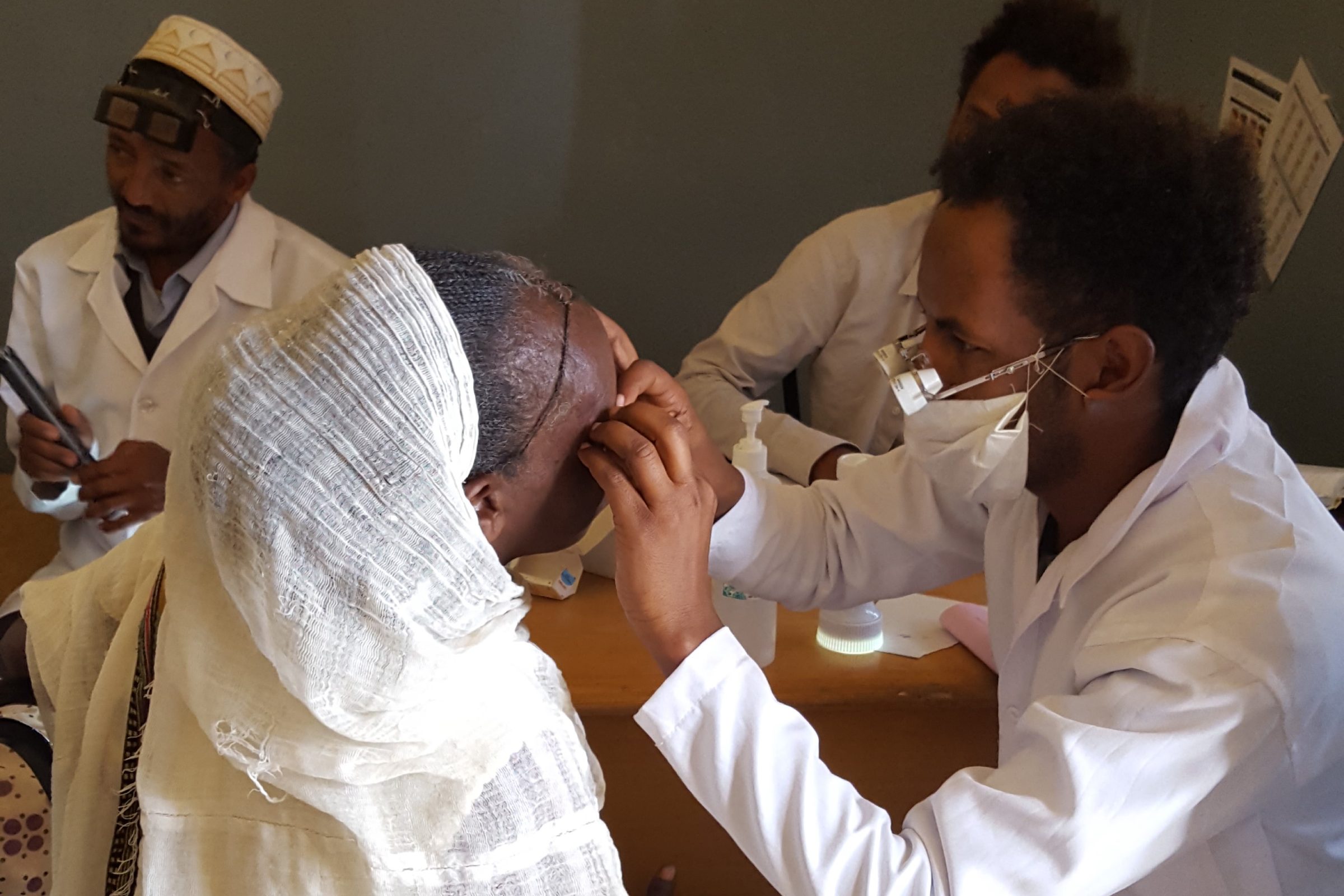
Eritrea achieved the milestone by implementing WHO’s SAFE strategy, which combined surgery for advanced trachoma, antibiotics, facial cleanliness and environmental improvements, particularly better access to clean water and basic sanitation services.
Dr Ghebreyesus said Eritrea conducted baseline surveys between 2006 and 2020 before gradually expanding interventions across affected communities, particularly remote rural areas with limited healthcare access and inadequate sanitation facilities nationwide.
WHO Regional Director for Africa Dr Mohamed Janabi, said Eritrea’s achievement reflected sustained political commitment, community leadership and strong partnerships in tackling neglected tropical diseases across the country and the region.
Janabi said the milestone brought Africa closer to ending suffering caused by neglected tropical diseases and offered hope to other countries pursuing trachoma elimination through coordinated public health action across Africa.
“Eritrea’s programme adopted community-led sanitation initiatives and digital tools for data collection and mapping, enabling health workers to identify affected communities and direct interventions to hard-to-reach populations,” he said.
He said the country surveyed all 58 sub-zones, its second-level administrative areas, and expanded interventions wherever trachoma was endemic, while predominantly using donated oral azithromycin antibiotics to prevent infection across Eritrea.
WHO Representative to Eritrea Dr Mary Stephen attributed the achievement to national leadership, community ownership and collaboration involving the Ministry of Health, partners and healthcare workers throughout the elimination campaign nationally.
Stephen said WHO would continue supporting the government and partners to sustain gains achieved through the elimination programme, ensuring communities remained protected against a possible resurgence of the disease in affected areas.
“Trachoma, caused by the bacterium Chlamydia trachomatis, is the world’s leading infectious cause of blindness and spreads through contact with discharge from infected people’s eyes and noses,” she said.
“Repeated infections can cause scarring of the inner eyelid, turning eyelashes inward and damaging the eye, potentially resulting in irreversible blindness if left untreated,” she added, explaining the disease’s serious effects.
Stephen said global efforts had reduced the population requiring trachoma interventions from an estimated 1.5 billion in 2002 to fewer than 100 million by November 2025, according to WHO in its report.
“However, about 92 million people remained at risk in trachoma-endemic areas as of March 2026, with the disease still constituting a public health problem in at least 29 countries.
“In 2025, WHO data showed that 98,829 people received surgery for advanced trachoma, while 47.4 million people received antibiotics to prevent and control the disease.
“Eritrea is also the 66th country globally and 23rd in WHO’s African Region to have eliminated at least one neglected tropical disease,” Stephen said, highlighting the country’s contribution to public health.


