

By Muhammad Amaan
The Kano State Government said it has enrolled more than 600 orphans and vulnerable children (OVC) and 4,200 people living with HIV (PLHIV) into the state’s health insurance scheme to improve access to quality healthcare.
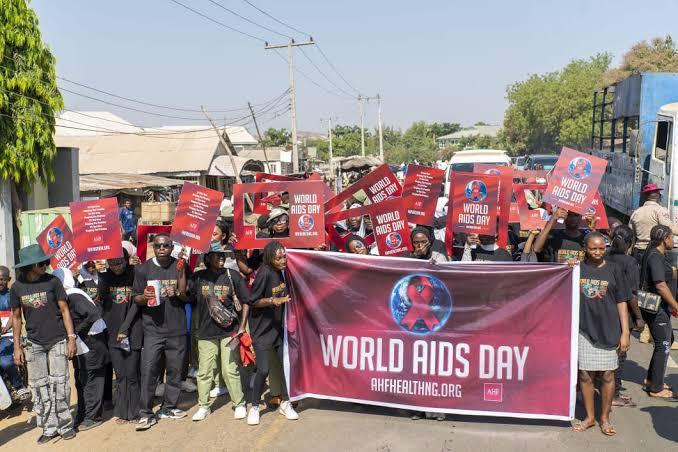
The Commissioner for Health, Dr Abubakar Labaran Yusuf, disclosed this at a media briefing on Monday to commemorate the 2025 World AIDS Day, with the theme: ‘Overcoming Disruptions, Sustaining Nigeria’s HIV Response.’
Dr Yusuf said the enrolment was implemented through the Kano State Health Trust Fund (KHETFUND) in collaboration with development partners.
He described the commemoration as an opportunity to stand in solidarity with millions of people living with HIV globally.
“For Kano State, we currently have 37,825 people living with HIV, including 4,381 children, with 551 recorded deaths so far in 2025,” he said.
The commissioner said the theme underscored the need for increased domestic financing for HIV response, especially as donor organisations gradually withdraw support.
He said the government responded by expanding the budget line for the Kano State Agency for the Control of AIDS (KSACA) from about N300 million to N2 billion for 2025 and beyond.
“We have released about N500 million this year alone to bridge gaps created by disruptions in external funding,” he said, adding that Governor Abba KabirYusuf remained committed to equitable and non-discriminatory healthcare for all residents.
Labaran listed priority areas for 2025 to include reducing stigma, improving access to care, strengthening prevention, and protecting vulnerable groups.
He said the government had enacted an Anti-Stigma and Discrimination Law and expanded access to the Kano State Contributory Health Scheme (KSCHMA) for PLHIV.
According to him, other achievements recorded during the year include provision of 24-hour solar power at the SACA office, procurement of operational vehicles, strengthening of data systems, and the launch of Nigeria’s first full-scale triple elimination programme for HIV, hepatitis and syphilis in six pilot facilities.
“This is the first initiative of its kind in the country, targeting pregnant women attending antenatal care,” he said.
He also announced the construction of a paediatric TB/HIV clinic at Murtala Muhammad Specialist Hospital, funded entirely by the state government.
On service delivery, Labaran said the state conducted 607,720 HIV tests in 2025, identified 2,440 new cases and placed 2,388 people on treatment.
He said 37,825 people were currently receiving care in various health facilities.
The commissioner also highlighted progress in preventing mother-to-child transmission, stating that 238,495 pregnant women were tested during their first antenatal visit, out of which only 34 tested positive.
“These mothers were properly managed, and none transmitted HIV to their newborns,” he said.
He said 31,277 children under 15 were tested, with 68 found positive and placed on treatment.
According to him, Kano conducted the highest number of early infant diagnosis tests in the country this year using the M-PIMA machine.
Dr Labaran reaffirmed the state’s commitment to achieving the goal of ending AIDS by 2030 and urged the residents to continue supporting people living with HIV and to help eliminate stigma.
“We must continue to advocate for those affected and ensure universal access to prevention, treatment, care and support,” he said.
In his remarks during a commemorative walk, the Director-General of KSACA, Dr Usman Bashir, said the event was organised to show solidarity with people living with HIV and remember those who had died.
“We are here to commemorate World AIDS Day and to show love to people living with HIV,” he said, adding that the walk brought together support groups, civil society organisations and state Ministries.
Dr Bashir said in spite of disruptions in national funding earlier in the year, Kano remained stable due to its sustainability plan, adding that HIV prevention involved more than condom use, and included PrEP, viral suppression and routine screening.


