
By Iyemah David
The Federal Government of Nigeria has urged a global compact to manage migration of health workers from developing countries to wealthier nations, warning that trends threaten equity, sustainability, and resilience of health systems.
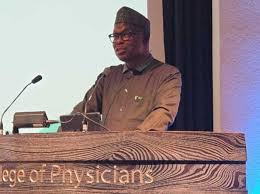
Minister of State for Health and Social Welfare, Dr Iziaq Salako, made the call while delivering a keynote address at the 2026 United Kingdom Global Health Summit in London city on Monday.
Dr Salako spoke on the theme, Shaping Tomorrow’s Health, Together, emphasising collaboration, innovation, and shared responsibility to build stronger, inclusive, and future-ready health systems globally.
He said migration of professionals from low- and middle-income countries had created pressures on health systems, as shortages deepened, service delivery weakened, and governments struggled to meet growing health needs.
Dr Salako said Nigeria was advocating a structured global framework ensuring ethical recruitment and fair compensation for countries losing personnel, arguing the model where poorer nations train and richer nations benefit is unjust.
According to him, Nigeria proposes migration agreements including compensation for source countries, joint training programmes, technology transfer, and structured circular migration pathways that allow workers gain experience abroad and return home.
He warned the global health workforce crisis had reached emergency levels, citing projections by the World Health Organisation (WHO) of a potential shortfall of about 10 million health workers worldwide by 2030.
He said Africa bore than a quarter of the disease burden yet accounted for less than three per cent of the health workforce, while Nigeria had four doctors per 10,000 people.
Salako added that emigration of Nigerian health professionals, called Japa, had worsened shortages, with surveys indicating many doctors were taking steps to leave, and thousands migrated to the United Kingdom recently.
He said government was responding through training capacity, increased medical school admissions, strengthened programmes for nurses and professionals, and diaspora engagement via knowledge exchange and coordinated medical missions to support system strengthening.


