

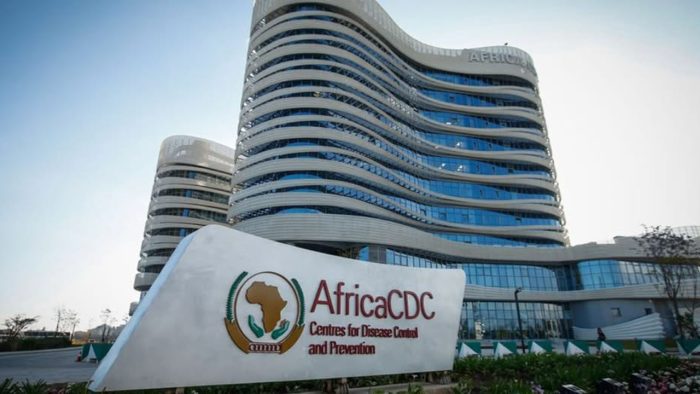
By Iyemah David
the Africa Centres for Disease Control and Prevention (Africa CDC) said Africa recorded 61,238 measles cases and 451 deaths across 19 countries in early 2026, highlighting persistent public health challenges.
Prof. Yap Boum II, Deputy Incident Manager for Mpox at the Africa Centres for Disease Control and Prevention Incident Management Support Team, disclosed this on Thursday during a regional press briefing.
He said in epidemiological weeks 1 to 13 of 2026, 61,238 cases and 451 deaths were recorded across Africa.
Prof. Boum said the figures represented a 0.7 per cent case fatality rate, stressing measles remained a serious health threat, particularly in Central Africa where transmission rates continued to remain high.
According to him, Africa recorded 84,918 cases and 1,511 deaths in 2023, 70,677 cases and 1,295 deaths in 2024, and 67,018 cases and 338 deaths in 2025.
He emphasised that although overall cases had declined over the years, outbreaks remained concentrated in high-risk countries, especially areas with weak healthcare systems and poor immunisation coverage.
Boum said the Democratic Republic of the Congo accounted for 70 per cent of cases and 93 per cent of measles deaths recorded during the reporting period.
He identified affected provinces as Equateur, Haut Lomami, Kasaï Oriental, Kinshasa, Nord Kivu, and Sud Kivu, citing poor healthcare access and displacement as contributing factors.
According to him, children remain the most affected, with 21 per cent of cases in infants under one year, 55 per cent among children aged one to four years.
He said another 20 per cent of cases were recorded among children aged five to 15 years, underscoring the impact of low vaccination coverage among vulnerable populations.
Prof. Boum explained that the outbreak was driven by low immunisation coverage, weak healthcare systems, population displacement, and poor awareness, particularly in conflict-affected and hard-to-reach communities.
“Overcrowding in internally displaced persons camps and difficulties in reaching remote populations have also exacerbated the situation,” he said.
He said the agency had supported integrated vaccination campaigns targeting measles, rubella, and polio, focusing on children under 15 years in the most affected communities.
“These campaigns aim to reach children under 15 years. Risk communication and community engagement have been intensified to improve vaccine uptake,” Boum said.
He added that the agency was collaborating with the World Health Organisation (WHO) and national governments to strengthen surveillance, mobilise vaccines, and improve outbreak response capacity.
Boum emphasised that although cases were declining continentally, concentration in high-risk countries highlighted the urgent need for sustained immunisation and improved healthcare access.
He emphasised that measles was vaccine-preventable, noting that expanding routine immunisation coverage remained critical to reducing infections and deaths across Africa’s vulnerable populations.


