

By Muhammad Amaan
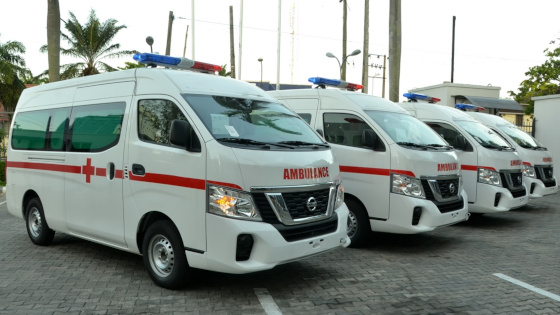
A new report has revealed that only seven per cent of emergency cases in Nigeria are handled by public ambulances.
The Q1 2026 industry report, published by Salvus Emergency, said the majority of Nigerians still depend on informal and private means during medical emergencies, despite the presence of more than 36 emergency response structures and the expansion of the National Emergency Medical Services and Ambulance System across 30 states.
According to the report, commercial buses account for 47 per cent of emergency transport, while 31 per cent of patients get to hospitals through private vehicles or walk-ins. Private ambulance services handle 15 per cent of cases.
The report noted that Nigeria records more than six million medical emergencies every year, yet NEMSAS coverage remains below 0.2 per cent.
It added that many Nigerians still avoid ambulances because they fear being asked to pay upfront, even though the Federal Government guarantees free emergency treatment for the first 48 hours.
The report said the problem is not simply a shortage of ambulances, but poor coordination, routing and handoff across the emergency care chain.
“The system fails because of fragmented coordination, routing and handoff, not a lack of hardware. The fault is in the connective tissue,” the report stated.
On response time, the report said Lagos records an average emergency response time of 17 minutes, far above the World Health Organisation’s eight-minute standard, while delays in rural Nigeria can stretch beyond 120 minutes.
It warned that delayed treatment is costing lives, estimating that 10 to 15 per cent of Nigeria’s 1.6 million annual deaths occur within emergency departments, largely because patients arrive too late or without pre-hospital stabilisation.
The report also highlighted wider gaps in the system, including poor data sharing, weak hospital readiness, delayed funding, low insurance coverage and the absence of a national paramedic registry.
It added that only 55 per cent of NEMSAS pickups by the third quarter of 2025 were taken to hospitals with functional intensive care units or emergency departments capable of handling major trauma cases.
The report further added that Nigeria’s emergency healthcare challenge would not be solved by adding more ambulances alone, but by improving coordination, trust, dispatch systems and real-time data across the sector.


