

By Muhammad Amaan with agency report
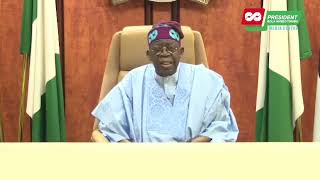
Nigeria’s President Bola Ahmed Tinubu has outlined his administration’s security gains, economic reforms, and plans for the country’s future.
The president outlined his achievements during Nationwide broadcast to celebrate Nigeria’s 27th Democracy Day on Friday, where he announced honouring the heroes of the June 12 struggle.
Nigerian Tribune Newspaper take a look at key takeaways from President Tinubu’s speech.
1. Security gains amid renewed threats
The President highlighted progress in the fight against terrorism, noting that terror-related deaths have fallen by 81 per cent since 2015 and that over 13,000 terrorists have been neutralised in the past year.
He revealed that more than 124,000 fighters and their dependents have surrendered since 2023 through Operation Safe Corridor, while warning bandits and kidnappers that the window for surrender will not remain open indefinitely.
He, however, acknowledged that the celebratory mood was dampened by the recent abduction of children in Oyo and Borno States.
2. Massive investment in defence and recruitment drive
To back the security push, Tinubu disclosed that the 2026 budget allocates N5.41 trillion to defence and security, the largest such commitment in the country’s history.
He added that the administration has also approved the recruitment of more than 50,000 new police officers alongside thousands of military recruits as part of efforts to tackle insecurity nationwide.
3. Electricity sector reforms and the Electricity Act
Tinubu, in the address, assessed the power sector’s troubles before he became president in 2023, citing chronic generation shortfalls, unreliable gas supply, fragile transmission infrastructure, and a metering deficit of over four million.
He pointed to the Electricity Act, which he had signed, as a major step forward, giving states the power to generate, transmit, and distribute electricity. He also noted that the Presidential Power Sector Task Force has been authorised to raise a N4 trillion bond to clear legacy debts in the sector.
4. National honours for pro-democracy heroes
Tinubu announced national awards for dozens of Nigerians who endured persecution, exile, and imprisonment during the struggle for democracy, including journalists, activists, and retired military officers.
He also confirmed that the Institute of Petroleum Studies in Kaduna will be renamed the General Shehu Musa Yar’Adua University of Geological Sciences and Engineering Technology in honour of the late general’s role in Nigeria’s democratic transition.
5. Direct appeal to young Nigerians against the “japa” trend
Tinubu used part of his address to speak directly to the country’s youth, urging them to see their future in Nigeria rather than abroad. He encouraged young people to build, work, innovate, and vote at home, arguing that nations are built by citizens who stay to solve problems rather than those who leave.


