

By Muhammad Amaan
Stakeholders from Organisations of Persons with Disabilities (OPDs), government institutions, civil society organisations, innovation hubs, the private sector, and the disability community have called for stronger and more practical measures to promote the meaningful digital inclusion of persons with disabilities (PWDs) across Nigeria.
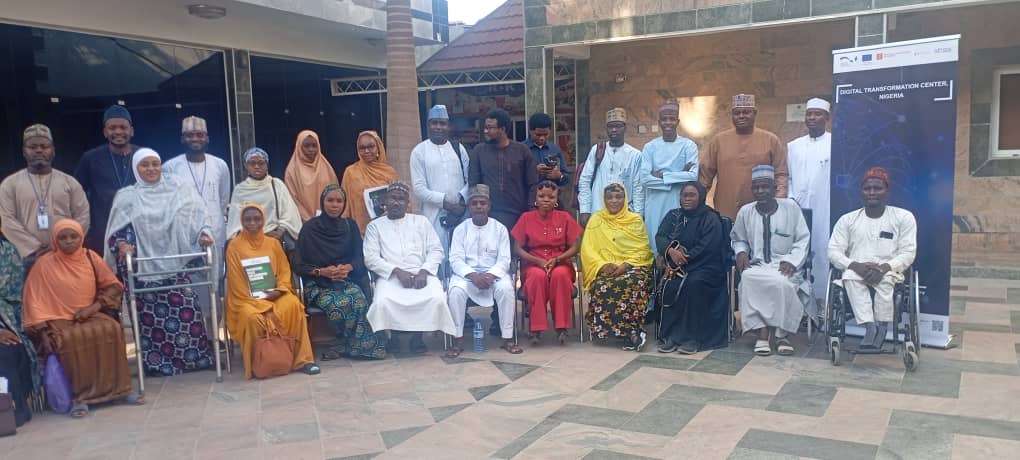
The Physical Stakeholder Validation Workshop on the Needs Assessment and Guidelines for Digital Inclusion of Persons with Disabilities in Nigeria, with the Vulnerable People Support and Development Initiative (V-PeSDI) among the participating organisations.
The workshop was organised by the GIZ Digital Transformation Centre (GIZ-DTC) Nigeria in collaboration with the Digital Bridge Institute (DBI).
The physical validation workshop brought together key stakeholders to review, strengthen and validate findings from a series of virtual stakeholder engagement sessions conducted between August 12 and 18, 2026.
The virtual engagements consisted of five sessions covering the five output areas of GIZ-DTC Nigeria and engaged a total of 235 stakeholders.
Guided by the globally recognised disability inclusion principle, “Nothing About Us Without Us,” participants emphasised the importance of ensuring that persons with disabilities are not merely beneficiaries of digital programmes but are actively involved in decisions, policies, technologies and services that directly affect their lives.
One of the major areas discussed during the workshop was Digitisation and Entrepreneurship, with participants examining the barriers that prevent digitally skilled persons with disabilities from transitioning from digital training into employment, entrepreneurship and sustainable economic empowerment.
Participants acknowledged that Nigeria’s rapidly expanding digital economy presents significant opportunities for persons with disabilities.
However, these opportunities continue to be constrained by barriers such as inaccessible digital products and services, limited involvement of PWDs during product development and user research, inadequate understanding of the business value of accessibility among innovators and technology developers, and insufficient funding for accessible technology and disability-inclusive innovation.
Other challenges identified included the high cost and limited availability of assistive technologies, inaccessible training materials and digital platforms, poor compatibility with screen readers, images without alternative text, small text sizes, and inadequate colour contrast.
Stakeholders stressed that these barriers continue to exclude many persons with disabilities from fully participating in Nigeria’s growing digital economy.
To address these challenges, participants proposed a number of practical recommendations for consideration in the proposed National Digital Inclusion Guidelines.
Among the key recommendations were the provision of specialised training for persons with disabilities whenever new digital applications and technologies are introduced, as well as the adoption of Web Content Accessibility Guidelines (WCAG)-compliant accessibility standards as mandatory requirements for publicly funded digital products and services.
Participants also emphasised the importance of conducting user testing with actual persons with disabilities across different disability groups before digital products and services are launched.
The workshop further recommended increased access to grants, funding and investment for accessible technology development and disability-inclusive innovation.
Stakeholders also called for stronger collaboration among government institutions, the private sector, civil society organisations, technology developers and Organisations of Persons with Disabilities to promote sustainable and coordinated approaches to digital inclusion.
Importantly, participants emphasised that digital skills programmes should go beyond basic training and create clear pathways towards employment, entrepreneurship, innovation and economic empowerment.
During the breakout sessions, stakeholders reviewed documented findings from the earlier virtual engagements, validated information that accurately reflected their experiences, strengthened areas requiring improvement and introduced additional barriers and recommendations that had not previously been captured.
Participants also worked collectively to identify and prioritise their top three recommendations for inclusion in the National Digital Inclusion Guidelines.
Rapporteurs documented the validated findings, additional recommendations, differing perspectives and priority actions emerging from the group discussions.
A key message that emerged from the workshop was that digital inclusion must go beyond simply providing access to technology.
True digital inclusion, participants noted, requires digital technologies and services to be accessible, affordable, usable and responsive to the diverse needs of persons with disabilities.
The workshop further reinforced the need to move away from designing programmes for persons with disabilities and towards designing programmes with persons with disabilities.
The Physical Stakeholder Validation Workshop represents an important step towards the development of a more inclusive and accessible digital environment in Nigeria.
The discussions demonstrated that achieving meaningful digital inclusion will require stronger accessibility standards, inclusive digital skills development, improved access to assistive technologies, sustainable funding for disability-inclusive innovation and the meaningful participation of persons with disabilities and their representative organisations.
As Nigeria continues its digital transformation journey, stakeholders reaffirmed that no meaningful digital future can be achieved if persons with disabilities remain excluded from digital opportunities, services and innovation.
The outcomes of the validation process are expected to contribute significantly to the development of practical and actionable National Digital Inclusion Guidelines aimed at ensuring that Nigeria’s digital transformation is accessible, inclusive and equitable for everyone.
The message from stakeholders was clear: a truly digital Nigeria must be a Nigeria where no one is left behind.


