

By Muhammad Amaan
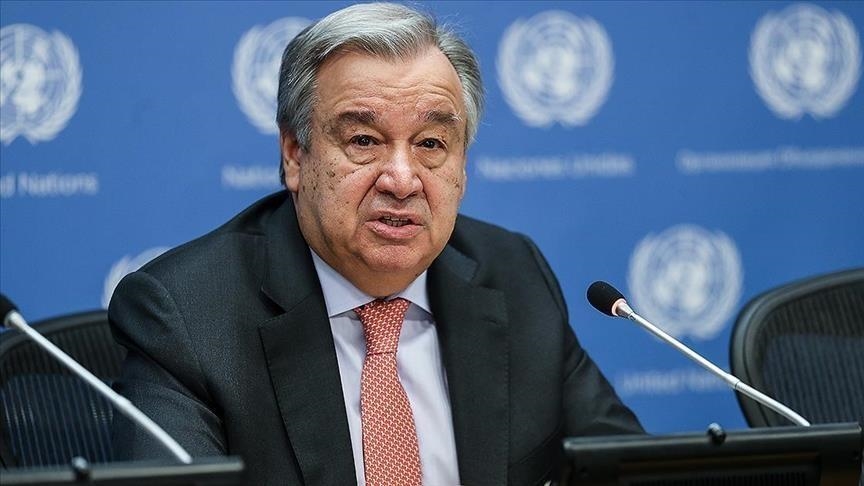
Powerful forces are threatening global cooperation, United Nations Secretary-General, António Guterres, warned on Saturday at an event marking the 80th anniversary of the General Assembly in London.
He described 2025 as a “profoundly challenging” year for international cooperation, stressing that global crises have tested the UN’s ability to uphold peace, justice, and shared values.
“Aid was slashed. Inequalities widened. Climate chaos accelerated. International law was trampled. Crackdowns on civil society intensified.
“Journalists were killed with impunity. UN staff were repeatedly threatened—or killed,” Guterres said.
The UN chief emphasised that in spite of these challenges, “humanity is strongest when we stand as one,” calling for renewed solidarity among nations and communities worldwide.
Reflecting on the past decade, he warned, “Conflicts in Gaza, Ukraine and Sudan have been vicious and cruel beyond measure. Artificial intelligence surged almost overnight. The pandemic accelerated nationalism.”
Guterres said the rise of nationalism has stalled progress on sustainable development, climate action, and global cooperation, threatening the very foundations of international solidarity and mutual responsibility.
Speaking at Methodist Central Hall, where the first UN General Assembly convened in 1946, Guterres urged delegates to be “bold enough to change,” recalling the courage of the founders.
“Bold enough to find the courage of those who came here 80 years ago to forge a better world,” he added, urging nations to embrace innovative solutions.
The UN reported that global military spending reached $2.7 trillion in 2025—over 200 times the UK’s current aid budget, equivalent to more than 70 per cent of Britain’s economy.
Fossil fuel profits continued to rise even as the planet broke record heat levels, highlighting the urgent need for climate action and systemic global reforms, Guterres said.
“And in cyberspace, algorithms rewarded falsehoods, fuelled hatred, and provided authoritarians with powerful tools of control, undermining democracy and global trust in information,” he noted.
Guterres called for a “robust, responsive and well-resourced multilateral” system capable of addressing interconnected global challenges, warning that “values of multilateralism are being chipped away daily.”
He praised the United Kingdom for being “a strong pillar of multilateralism and champion of the United Nations today,” noting its leadership in global diplomacy and humanitarian action.
Looking ahead, Guterres called for an international system that reflects modern realities, including Security Council reform, fairer financial systems, and a renewed commitment to sustainable development.
“As global centres of power shift, we have the opportunity to build a future that is either more fair or more unstable,” he said, stressing the stakes of inaction.
He reminded delegates that early UN staff bore “visible wounds of war—a limp, a scar, a burn—yet dedicated themselves to building a safer, more just world.”
“There is a persistent myth that peace is naïve, and that the only ‘real’ politics is self-interest and force,” Guterres warned, highlighting ongoing geopolitical cynicism.
“But the founders of the United Nations knew war intimately. They understood peace, justice, and equality are the most courageous, practical, and necessary pursuits of all,” he said.


