

By Muhammad Amaan
The Federal Government of Nigeria said the country risks losing decades of progress in its fight against major diseases unless it urgently strengthens domestic funding for healthcare, the Special Adviser to President Bola Tinubu on Health, Dr Salma Anas, warned.
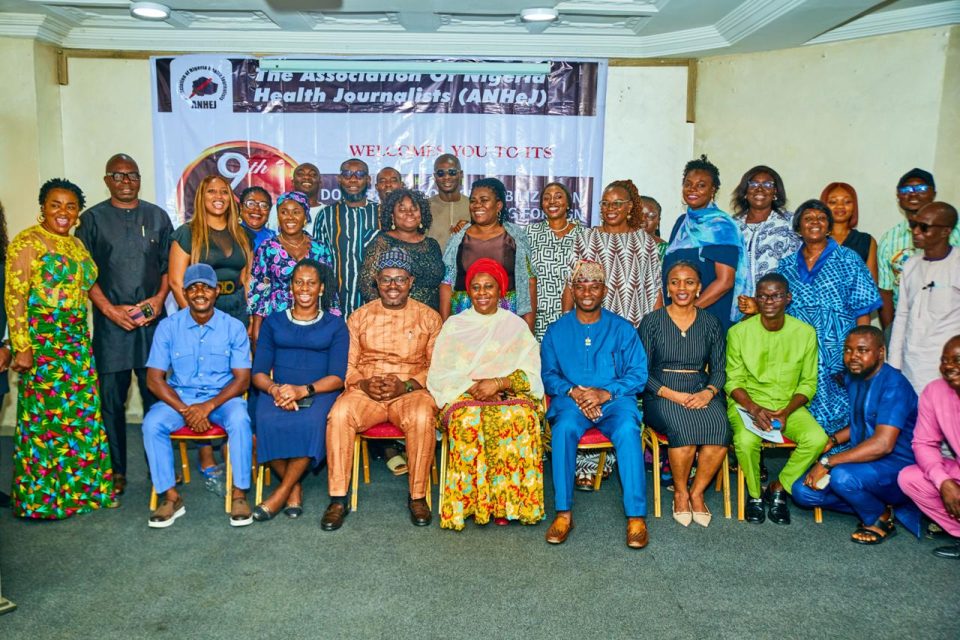
Speaking in Abuja at the 9th Annual Health Conference of the Association of Nigerian Health Journalists (ANHEJ), she cautioned that Nigeria can no longer depend on foreign donors to sustain critical programmes.
Dr Salma Anas said for years, partners such as PEPFAR, the Global Fund, Gavi, the Vaccine Alliance and the World Bank have financed a large share of key interventions, including HIV, tuberculosis, malaria and routine immunisation.
According to her, longstanding dependence has left the country vulnerable as donor priorities shift, with Nigeria now facing an expected decline of between 50 and 20 per cent in foreign grants.
She, therefore, warned that any reduction would disrupt services, trigger drug shortages and roll back gains in communities most at risk.
“Our health and prosperity must no longer rest on external benevolence. Domestic ownership is now a national survival strategy,” she said.
Dr Salma Anas explained that despite improvements in per capita health spending, Nigeria’s financing structure remains weak.
She said the country still falls short of the Abuja Declaration benchmark, budget releases are often delayed and many primary health centres operate without predictable funding.
She noted that out of pocket payments remain the dominant means through which Nigerian’s access care, pushing many into poverty and making it difficult for the country to achieve Universal Health Coverage.
“External grants still shoulder a significant share of our health expenditure. This is a structural vulnerability that threatens our long-term stability,” she said.
The presidential adviser said the federal government is responding through the Nigeria Health Sector Renewal Investment Initiative, which focuses on strengthening primary healthcare, improving governance, expanding local production and enhancing health security.
Central to this effort is the Basic Health Care Provision Fund (BHCPF), introduced to give PHCs stable financing.
She said the proposed increase of the fund from one to two per cent of the Consolidated Revenue Fund is currently receiving legislative attention and would immediately expand the resources available to frontline facilities.
“This single legislative commitment, when fully enacted and funded, will instantly double the fiscal space for health for our poorest citizens,” she said.
She added that digital tracking tools under the upgraded BHCPF 2.0 are being deployed to improve accountability and reward facilities based on performance.
Salma Anas also highlighted ongoing efforts to scale up health insurance coverage under the National Health Insurance Authority and reiterated the government’s push to strengthen the Sugar Sweetened Beverages Tax to create additional health revenue.
She said the government is simultaneously working to retain funds within the Nigerian health economy by increasing local production of medicines and consumables and modernising tertiary hospitals to reduce medical tourism.
Mrs Anas stressed that federal reforms alone cannot deliver the required transformation and urged state governments to raise their health allocations and commit to more transparent budgeting.
She noted that journalists have a crucial role in tracking reforms and ensuring accountability.
“You are not just reporters. You are custodians of accountability,” she said.
In his keynote address, the Minister of State for Health and Social Welfare, Dr Iziaq Salako, represented by Babatunde Akinyemi, reinforced the need for stronger domestic resource mobilisation.
While acknowledging Nigeria’s long history of receiving substantial external support for health, he cautioned that donor funding has become increasingly uncertain due to global economic and geopolitical shifts.
Dr Salako said the government is working to ensure continuity of essential services as donor transitions evolve and emphasised the importance of building a financing system that can withstand fluctuations in external support.
He added that states experimenting with innovative financing models and private sector efforts are contributing to a more diversified funding base.
In his remarks, ANHEJ’s President, Mr Joseph Kadiri, said the decline in foreign aid has exposed gaps in Nigeria’s health financing system and heightened the need for sustainable domestic funding.
He stressed that journalists play a critical role in ensuring transparency, improving public understanding of health policies, and monitoring government commitments.
Mr Kadiri said as health journalists, they stand at the centre of this transformation and must ensure that policy commitments translate into real improvements for citizens.
He urged reporters to deepen engagement with health institutions, scrutinise implementation gaps and counter misinformation.


