

By Muhammad Amaan with agency report
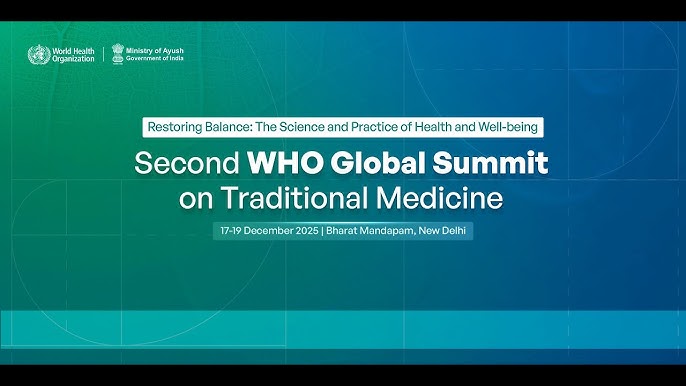
The second WHO Global Summit on Traditional Medicine concluded in India, marking a significant milestone in the field of health and wellness.
Over the past three days, experts from around the world engaged in meaningful discussions regarding traditional medicine, showcasing India’s commitment to being a robust platform in this realm, supported by the World Health Organization (WHO).
Highlighted during the summit was the establishment of the WHO Global Centre for Traditional Medicine in Jamnagar, India.
The centre was entrusted with this responsibility during the first summit in 2022, reflecting the global trust placed in India. The success of this summit serves as a testament to the expanding influence and recognition of the centre.
The summit witnessed an exciting confluence of traditional knowledge and modern practices. New initiatives were introduced aimed at transforming the future of medical science and holistic health.
Health ministers and delegates from various countries participated in extensive dialogues that promoted joint research efforts, simplified regulatory frameworks, and new avenues for knowledge sharing.
These collaborations are poised to enhance the safety and reliability of traditional medicine, crucial for its global acceptance.
Key agreements reached during this summit reflect strong partnerships. Efforts to strengthen research, increase the use of digital technologies in traditional medicine, and create globally trusted regulatory frameworks were discussed.
Exhibitions showcased innovative collaborations between tradition and technology, through digital health technology and AI tools, enhancing the potential for more effective global health solutions.
Yoga, an integral part of traditional medicine, was also emphasized. Its global reach has been recognized, particularly with the United Nations declaring June 21 as International Yoga Day, spearheaded by India and supported by over 175 countries. Special commendations were awarded to individuals significantly contributing to the promotion and growth of yoga.
The summit also marked the inauguration of the WHO’s South-East Asia Regional Office in Delhi, which aims to enhance research and regulatory frameworks in healthcare.
India is fostering global partnerships to promote healing, including establishing a Centre of Excellence for BIMSTEC countries and collaborating with Japan to integrate science, traditional practices, and health.
The theme of this summit, “Restoring Balance: The Science and Practice of Health and Well-being,” underscored the importance of balance in health, as recognized in Ayurveda.
Discussions highlighted that numerous modern health issues stem from lifestyle imbalances, indicating a need for urgent action to restore balance.
As traditional medicine stands at a crucial juncture, there is a collective responsibility to secure its rightful place in modern healthcare.
Evidence-based practices, alongside historical herbal practices like Ashwagandha, were spotlighted for their potential in global health.
The summit confirmed joint efforts between India’s AYUSH Ministry and the WHO Traditional Medicine Centre to bolster integrative cancer care.


