

By Racheal Abujah
Thirty-four-year-old community health nurse, Kabir Bello, carefully navigates a motorcycle down a narrow, sandy path in the Damangaza settlement of Lokogoma District, FCT.
He is heading towards a community cut off from the nearest standard health facility.
Strapped to the back of his motorcycle is a blue vaccine carrier packed with ice packs and life-saving vaccines. Every journey is a race against distance, heat, insecurity and poor roads.
For Bello, however, it is more than another day’s assignment.
It is part of Nigeria’s increasingly urgent effort to find and vaccinate an estimated 2.1 million zero-dose children; children who have never received a routine vaccine.
Behind the statistics are children living in remote villages, nomadic settlements, border communities, insecure areas, and crowded urban settlements who remain largely outside the reach of routine primary healthcare.
Nigeria’s zero-dose burden is therefore not only a measure of immunisation performance, but also a reflection of inequality in access to healthcare.
At the centre of Nigeria’s community mobilisation strategy is the Northern Traditional Leaders Committee (NTLC) on Primary Health Care Delivery.
The committee brings together traditional rulers from the 19 northern states and the FCT to support routine immunisation, polio eradication, maternal and child health, nutrition, disease surveillance and primary healthcare.
The Sultan of Sokoto, Alhaji Sa’ad Abubakar III, serves as Patron, while the Emir of Argungu, Alhaji Samaila Muhammad Mera, chairs the committee.
Its quarterly reviews provide a platform for examining immunisation performance, identifying communities being missed and agreeing on measures to improve access.
For frontline workers such as Bello, however, decisions made in Abuja only matter when they reach the child at the end of a difficult road.
“The heat is our greatest enemy after hours on the road. If the cold chain breaks, the vaccines become useless. In places like these, you do not always get another chance,” Bello said.
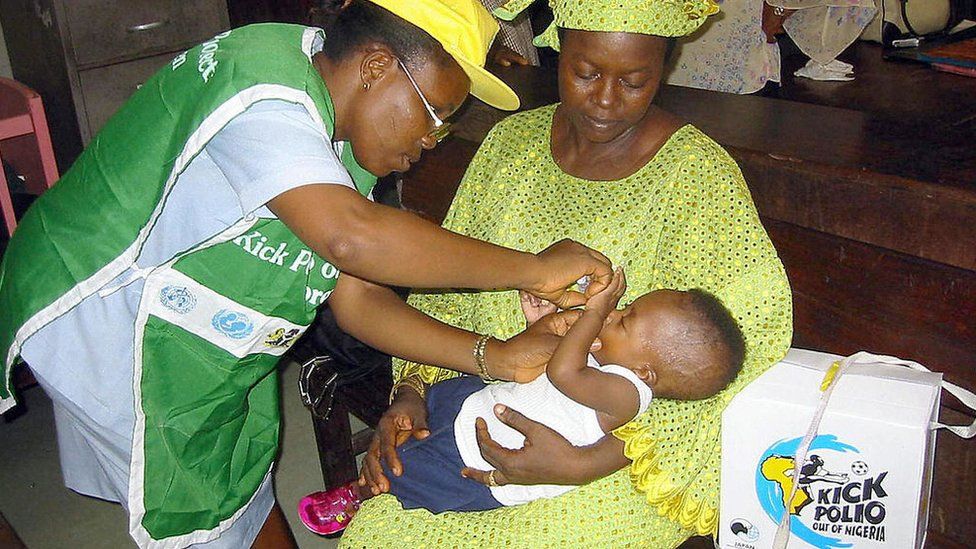
Under Nigeria’s Zero-Dose Reduction Plan (ZDROP), mobile teams take services directly to communities rather than waiting for families to travel to health facilities.
The approach increasingly combines immunisation with other primary healthcare services, including nutrition, malaria prevention and maternal and child health interventions.
For 28-year-old Mrs Adama Isah, who lives in a remote settlement in Sokoto State, the outreach brought her three-year-old son into the health system after years of being missed.
Born during a period of insecurity, Isah said her son had missed routine immunisation appointments because of fear, misinformation and difficulties travelling.
“We felt forgotten. People told us vaccines were dangerous. Others warned us not to travel because of attacks on the roads.”
Health workers implementing the Gavi-supported S-TRACE Project eventually identified the family through community mapping and active case-finding.
Instead of waiting for her son to appear at a health facility, health workers went looking for him.
“When they came to our house, my son cried after receiving the injection.
“But that was the first night in years that I slept peacefully because I knew he was finally protected,” Isah said.
The challenge is different in Kano, where population density, migration, poverty and informal settlements can make children difficult to identify and follow up.
Twenty-two-year-old Mrs Chioma Oyindika migrated to Kano in search of work and lives with her nine-month-old daughter.
For Oyindika, travelling to a health facility meant transport costs, long queues and losing a day’s income.
“I leave home early every morning for the market. The clinic is far away and the queues are long. Missing work means my family may not eat.”
Community Health Influencers, Promoters and Services (CHIPS) personnel are helping to close that gap by taking services into markets and informal settlements.
Oyindika said her daughter received her first pentavalent vaccine at a temporary vaccination point near her stall.
“They simply brought the service to us,” she said.
Her experience illustrates one of the central realities of Nigeria’s zero-dose challenge: sometimes the problem is not unwillingness to use health services, but the distance between families and the services they need.
The Federal Government says Nigeria is beginning to record measurable gains.
The Coordinating Minister of Health and Social Welfare, Prof. Muhammad Pate, said findings from the 2025–2026 Nigeria Mini Demographic and Health Survey showed an average 10.5-percentage-point increase in IPV2 coverage within one year.
“We are still not where we want to be, but that is a big jump from where we were in the space of one year,” Pate said.
He said Penta-3 coverage also increased, although progress varied significantly across states.
The Executive Director of the National Primary Health Care Development Agency (NPHCDA), Dr Muyi Aina, said social and behavioural factors were increasingly becoming major obstacles to routine immunisation.
“The barriers are increasingly social and behavioural. We still have some logistical challenges in reaching hard-to-reach and insecure locations, but mostly it is about people making a choice whether to take or not to take the vaccine.
“That makes traditional rulers particularly important. When you lead, communities respond. They trust you, they listen to you,” he said.
According to Aina, the latest Mini-DHS data shows Penta-3 coverage rising from 53.4 per cent to 54.8 per cent, although several states recorded declines.
The IPV picture was more encouraging; with national coverage increasing by 10.5 percentage points; yet, substantial immunity gaps remain.
Routine IPV coverage in Sokoto is below 10 per cent, while about eight in 10 children in Kebbi are yet to receive the vaccine, according to figures presented at the meeting.
Nigeria has also continued to detect circulating variant polioviruses.
Dr Aina said the country had recorded 30 cVPV2 cases and seven cVPV3 cases, with Zamfara, Kebbi and Sokoto accounting for about 70 per cent of detections.
“Campaigns alone cannot get us across the finish line. We must solve the problem of routine immunisation,” he said.
Recent activities across 15 high-risk northern states reached 93 per cent of planned settlements, 84 per cent of previously missed settlements and 96 per cent of migrant settlements.
The agency is also moving towards household-level monitoring so that children, rather than merely settlements, become the unit of accountability.
The WHO Representative in Nigeria, Dr Pavel Ursu, said traditional institutions would be essential to reaching the remaining zero-dose children.
Ursu urged traditional rulers to use their influence through palaces, mosques, churches and community gatherings to identify missed households, counter misinformation and promote routine immunisation.
“The final mile cannot be travelled from Abuja; it runs through villages, traditional institutions, faith communities and households. Together, we must ensure that no child remains invisible,” he said.
According to Ursu, Nigeria records nearly eight million births annually, meaning every one-percentage-point increase in immunisation coverage protects approximately 80,000 additional children.
He said about 57 per cent of children aged 12 months to 23 months were fully vaccinated nationally, compared with 41.5 per cent in the North-West, where about 28 per cent had received no vaccines.
Ursu said nearly nine out of 10 circulating variant poliovirus cases detected this year were among zero-dose children, demonstrating the close relationship between immunity gaps and poliovirus transmission.
Nigeria’s traditional leadership strategy is no longer limited to the North.
In April 2026, the Federal Government, through the NPHCDA, inaugurated the Southern Nigeria Traditional Rulers Committee on Primary Health Care (SNTRC-PHC) to strengthen community participation in healthcare across the South-East, South-South and South-West.
The committee is designed to mobilise traditional rulers around primary healthcare, maternal and child health and immunisation.
For the South-South, where riverine settlements, difficult terrain, population movement and dispersed communities can complicate access to healthcare, traditional institutions can provide an important bridge between health authorities and households.
The expansion means that lessons from the North can be adapted to different cultural and geographical settings.
The UNICEF Representative in Nigeria, Ms Wafaa Abdelatef, praised traditional leaders for their contribution to Nigeria’s certification as free of wild poliovirus in 2020, while warning that children in remote, nomadic, border and insecure communities remained vulnerable.
Ms Abdelatef identified Kebbi, Sokoto and Zamfara as states requiring intensified efforts.
“The challenge before us is no longer simply to eliminate a virus. The challenge is to ensure that every child is reached,” she said.
Nigeria’s attempts to close the remaining gaps raises another question: is becoming increasingly important: who will pay to sustain the progress?
Nigeria has secured substantial support from Gavi for the 2026–2030 periods while the Federal Government has committed domestic resources to vaccines.
The Chief Executive Officer of Vaccine Network for Disease Control (VNDC), Mrs Chika Offor, said civil society’s role in financing accountability was becoming increasingly important.
She said Gavi had opened a 2026 funding opportunity for Nigerian civil society organisations focused on immunisation financing and public financial management, including advocacy, budget tracking and reforms in Bayelsa, Sokoto and Zamfara.
“The initiative is significant because it links vaccine coverage with the question of how money is allocated, released, tracked and used,” she said.
Available Gavi data shows that in 2022, Nigeria spent about 177.5 million dollars on routine immunisation, including vaccines, with government financing accounting for about 55 per cent and external funders about 45 per cent.
For civil society, therefore, vaccine financing is not simply about buying doses.
As Nigeria funds its own vaccines, money must cover more than just the shots; it must support cold storage, transport, outreach, and local workers.
To protect children, experts say funding must arrive on time, stay steady, and remain open for all to see.
(NANFeatures)


