
By Muhammad Amaan
The Africa Health Budget Network (AHBN) has called on the Nigerian government for urgent action to ensure that every child is reached with life-saving vaccines.
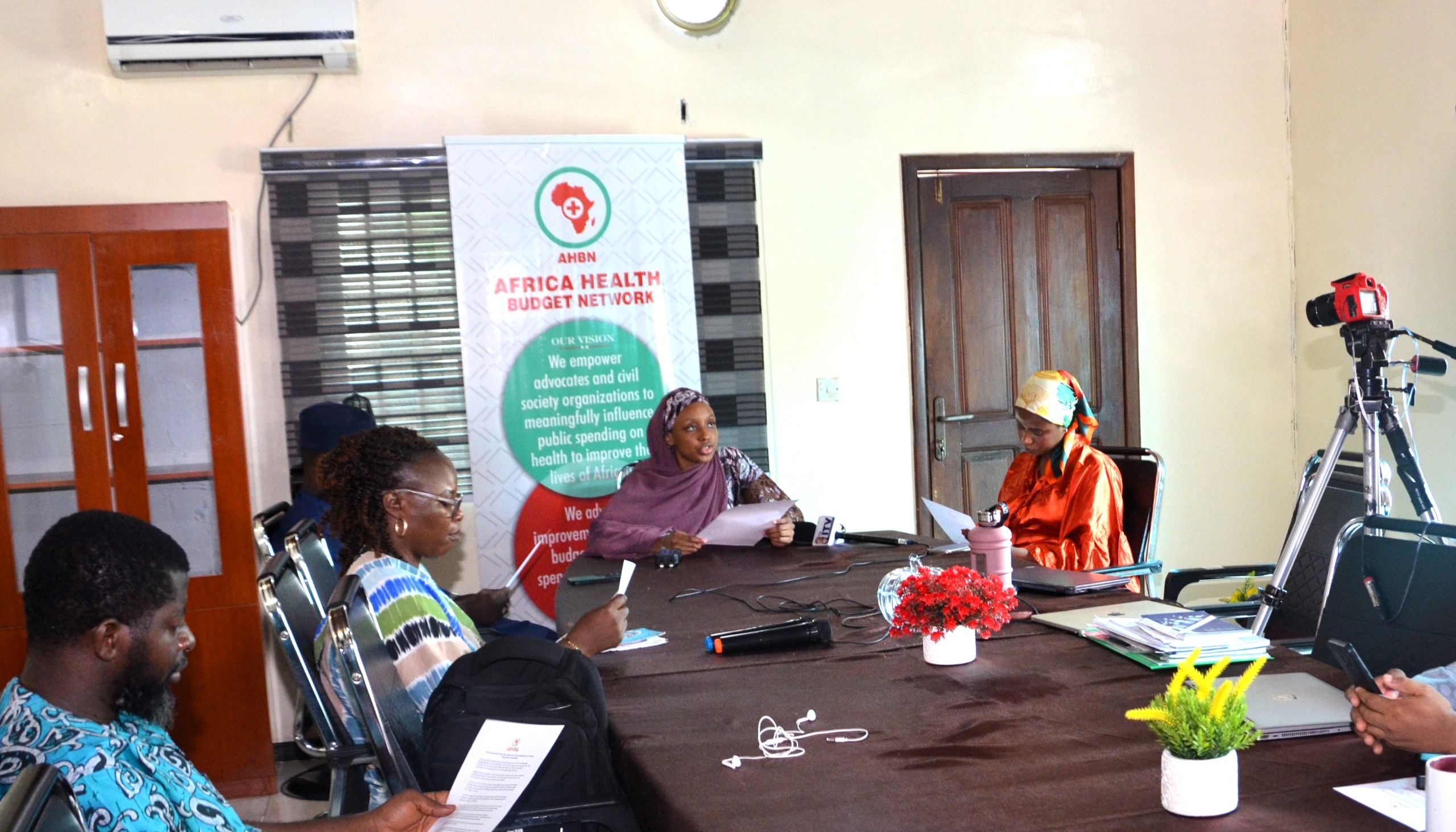
Addressing a press conference at the AHBN Building in Abuja, to commemorate World Immunization Week 2026 under the theme “For Every Generation, Vaccines Work,” the organisation said immunization remains one of the most cost-effective interventions for improving child survival and strengthening primary health care.
AHBN’s Health System and Security Specialist, Khadijah Hamid Bobboyi and Programmes Delivery and Francophone Liaison, Amina Haladu Mohammed, said Nigeria still has an estimated 2.1 million zero dose children, the highest globally, largely concentrated in underserved and hard to reach communities.
“In 2025, over N230 billion was allocated for immunization. However, only about NGN 68 billion has been released, leaving a financing gap of approximately NGN 163 billion. This shortfall continues to constrain vaccine procurement, distribution, and last mile service delivery, with direct implications for coverage and equity.
“As Nigeria prepares for the 2026 budget cycle, this pattern of partial releases must be addressed. Closing the gap between allocation and actual disbursement is critical to sustaining immunization gains and reaching missed children,” they said.
The duo added that stronger alignment is required across financing, procurement, and service delivery systems to ensure that resources translate into vaccines at facility and community levels.
“This includes improving efficiency, strengthening data systems, and reinforcing accountability across institutions.”
They also stated that state governments remain central to progress. “Variations in prioritization, funding, and implementation continue to drive inequities in immunization outcomes. Addressing the zero-dose burden will require stronger subnational leadership and targeted interventions.”
According to them, “With improved financing, stronger governance, and coordinated action, Nigeria can significantly reduce the number of zero dose children and strengthen its immunization system.”
The AHBN also outlined five recommendations to the federal government;
1. Federal Ministry of Finance, Budget and National Planning and Office of the Accountant General to immediately release the outstanding NGN 163 billion and establish a predictable disbursement framework for immunization financing
2. National Assembly, through Senate and House Committees on Health and Appropriations, to operationalize the Lagos Declaration by strengthening oversight on immunization budget performance, releases, and utilization
3. Federal Government and legislators to increase the Basic Health Care Provision Fund from at least 1% to 2% of the Consolidated Revenue Fund
4. State Governors, Commissioners of Health and Finance to prioritize routine immunization through dedicated budget lines, timely releases, and targeted strategies to reach zero dose children
5. Federal Government to invest in local vaccine research and manufacturing capacity through NIPRD/PVAC and strategic partnerships to strengthen long term vaccine security.


