

By Muhammad Amaan
The Bauchi State Primary Health Care Development Board (BSPHCDB) and the African Health Budget Network (AHBN) have launched a new Gavi-funded project to identify and vaccinate more than 40,000 zero-dose and under-immunised children across 11 Local Government Areas in the state.
The initiative, titled “Strengthening Immunization Coverage and Budget Accountability to Reach Zero Dose and Under-Immunized Children in Bauchi State,” was flagged off at an inception meeting hosted by BSPHCDB.
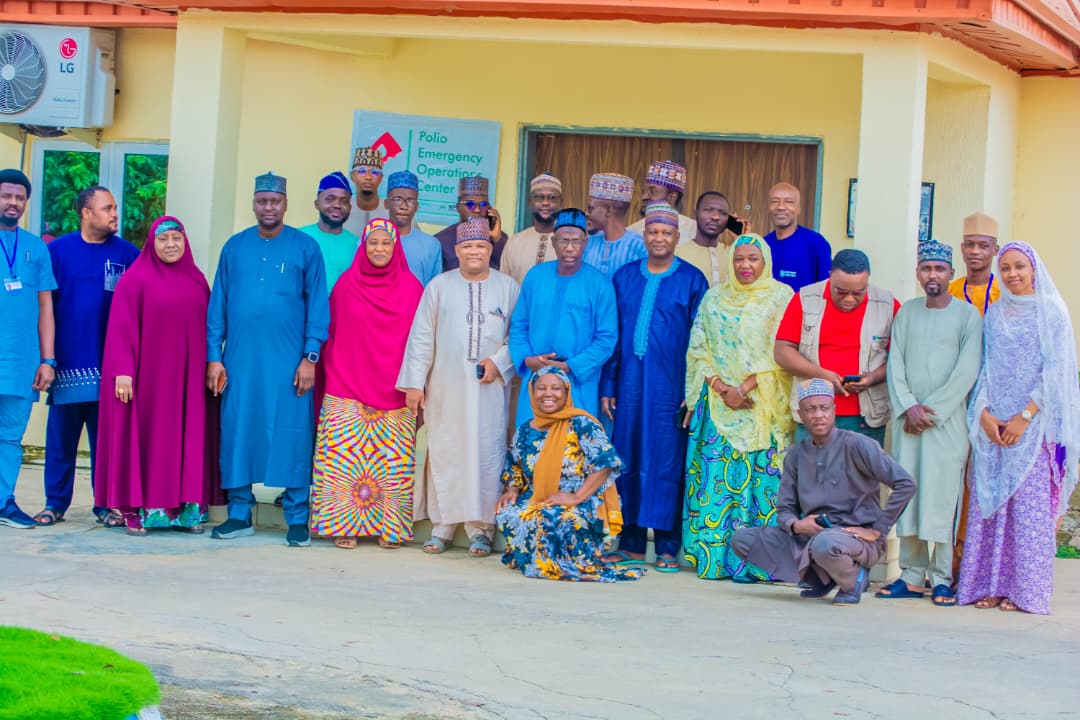
The meeting brought together state health leaders, board directors, development partners, and representatives of 11 Community Based Organizations (CBOs) selected for community-level outreach.
The project is funded by Gavi, with MannionDaniel serving as the Fund Manager.
Opening the event, Dr Rilwanu Mohammed, Executive Chairman of BSPHCDB, commended AHBN for its sustained collaboration with the state. He cited AHBN’s role in the Zero Dose Learning Hub (ZDLH) and praised the organization for developing the Immunization Financing and Accountability Scorecard for 2023–2025, which he said has strengthened financial transparency and resource tracking for immunization in Bauchi.
In a data-driven presentation, Dr. Aminu Magashi Garba, AHBN Coordinator, said the project will target 40,659 zero-dose and under-immunized children in Bauchi, Kirfi, Bogoro, Toro, Ganjuwa, Ningi, Warji, Misau, Jama’are, Katagum, and Zaki LGAs.
He noted that the intervention combines improved service delivery with strict budget accountability to ensure funds reach the last mile.
Dr Hassan Shuaibu Musa, AHBN State Lead, charged the 11 selected CBOs to deliver on clear performance targets.
He directed them to conduct timely community mapping and household registration, maintain accurate and verifiable data, support ward-level microplans, and lead culturally appropriate demand-generation activities.
He also stressed transparent financial management using Scorecard indicators to document fund use and outcomes.
AHBN technical teams outlined accountability measures for implementation. These include deliverables such as number of households mapped, children identified and referred, and outreach events conducted.
There will also be spot checks, joint field monitoring with BSPHCDB, data verification exercises, and capacity building in data collection, social mobilization, and financial reporting. Regular review meetings will be held to refine strategies based on field feedback.
Speaking on behalf of the CBOs, representatives pledged to leverage local networks to locate missed children and mobilize caregivers.
Partners and technical agencies also committed to supporting capacity building, monitoring and evaluation, and ensuring timely disbursement of funds through the Gavi CSO Financing Mechanism.
The meeting agreed on five technical priorities: data-driven targeting using zero-dose estimates, application of the Immunization Financing and Accountability Scorecard, capacity strengthening for CBOs and health teams, strengthened coordination between BSPHCDB, AHBN and partners, and adaptive management with clear indicators.
Dr Rilwanu Mohammed and other board directors reaffirmed the state’s commitment to civil society engagement and transparent financing. Dr. Hassan emphasized that measurable performance by CBOs will determine continued engagement and possible scale-up.
Stakeholders adopted an immediate action plan to finalize LGA microplans, commence community mapping and household identification, begin CBO training, and schedule the first performance and accountability review. A joint monitoring schedule and reporting template will also be circulated.
With clear performance expectations and an accountability framework anchored by the Scorecard, stakeholders said the project marks the official start of a coordinated effort to ensure no child in Bauchi is left behind in routine immunization.


