

By Muhammad Amaan
The Federal Government of Nigeria said decriminalising attempted suicide is a public health and human rights imperative requiring urgent legislative action to replace punishment with care and appropriate intervention.
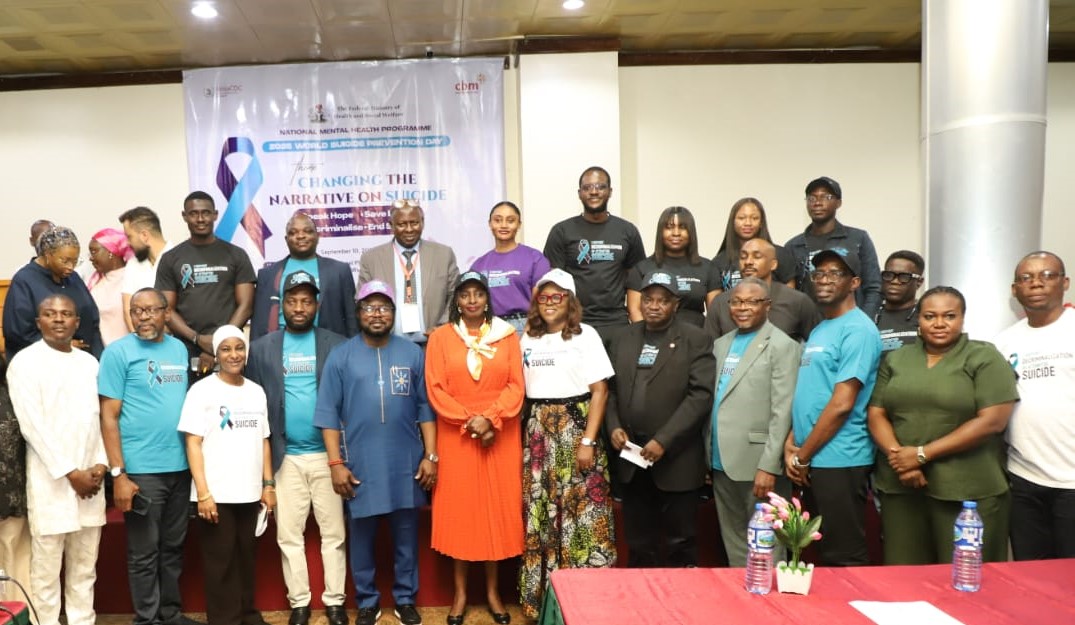
The Minister of State for Health and Social Welfare, Dr Iziaq Salako, said this on Thursday in Abuja at a media conference commemorating 2026 World Suicide Prevention Day.
Dr Salako, represented by the Permanent Secretary, Ms Daju Kachollom, said the reform would replace punishment with care, support and appropriate intervention for people experiencing mental health crises.
He said Nigeria remained one of about 24 countries where attempted suicide was still a criminal offence under Section 327 of the Criminal Code Act and Section 231.
According to him, the provisions were colonial-era laws that turned mental health emergencies into criminal matters, adding that Nigeria was now choosing compassion over punishment.
He said the Federal Executive Council (FEC) had approved the ministry’s position on decriminalising attempted suicide, paving the way for legislative action by the National Assembly.
“The matter will now proceed to the National Assembly for the legislative process, and we are hopeful that it will be concluded without delay,” he said.
Dr Salako said the ministry had established a National Task Force on the Decriminalisation of Attempted Suicide, comprising government, academia, professional associations, civil society and development partners.
He said the task force had conducted stakeholder consultations, engaged policymakers across the three arms of government and developed a Government White Paper on the issue.
According to him, the group had also undertaken advocacy, sensitisation and awareness activities on suicide prevention and the decriminalisation of attempted suicide.
The minister, however, said legislation alone could not prevent suicide, emphasising the need to strengthen mental health services and expand access to quality care nationwide.
“We must continue to strengthen mental health services, expand access to quality care, promote early identification and intervention, support persons with lived experience, empower communities and foster open conversations.
“Suicide prevention is a shared responsibility, and our collective goal must be a society in which people in distress can seek help without fear, stigma or discrimination,” he said.
Responding to questions from newsmen, Ms Kachollom said the ministry was working towards greater integration of mental health services into other health programmes and would examine gaps affecting implementation.
She acknowledged gaps in public awareness and availability of mental health information, promising that the ministry would strengthen sensitisation and provide more data to guide interventions.
Kachollom said the ministry would use tele-radio programmes and other platforms to create awareness and sensitise Nigerians on mental health and available support services.
Also speaking, the Director of Public Health, Dr Charles Nzelu, represented by Dr Adebobola Bashorun, Coordinator, National AIDS and STIs Control Programme (NASCP), said the theme called for rejecting fear, stigma and misinformation.
Dr Nzelu said the Department of Public Health remained committed to providing strategic leadership and coordination for mental health promotion and suicide prevention.
He said the National Mental Health Programme supported implementation of national policies and strategies, integration of mental health into primary healthcare and capacity building for health workers.
He added that community-based interventions and partnerships for suicide prevention were being strengthened, while the National Task Force facilitated stakeholder engagement and evidence generation.
Nzelu said the inclusive approach involving legal experts, mental health professionals, government institutions and persons with lived experience was important to ensuring responses reflected Nigerians’ realities.
On available data, Dr Tunde Ojo, National Coordinator, National Mental Health Programme, said work was ongoing to develop national data on lifetime attempted suicide and mental health indicators.
“Currently, we do not have mental indicators for the country, but there are plans underway,” he said.
He said a first draft of the national mental health indicators was expected to be ready before the end of the year for stakeholders’ input and consideration.
Dr Ojo said mental health had already been integrated into the Non-Communicable Diseases (NCDs) Programme, with the first level of integration dating back to 2022.
He explained that mental health was incorporated into the first master plan on NCDs, providing a foundation for integrating mental health into broader health interventions.


