
By Muhammad Amaan
The Korean Consul-General to Nigeria, Mr Sang Ho Lee, says the country has earmarked $5.6 million for children’s immunisation project in Nigeria from December 2025 to 2026.
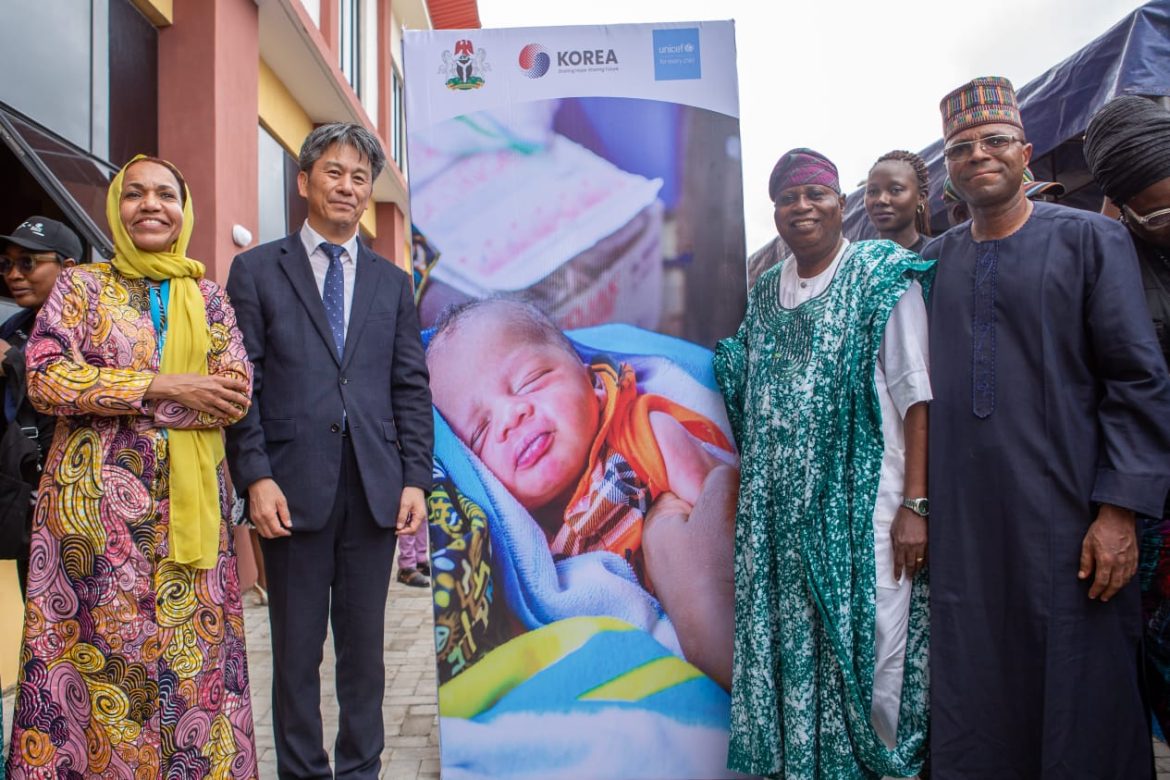
Lee disclosed this during the flag-off ceremony of the Republic of Korean UNICEF Investments on Routine Immunisation on Thursday in Badagry, Lagos.
He said the purpose of the project was to reduce zero-dose vaccination in children in selected targeted areas comprising 40 local government areas in five states: Lagos, Ogun, Niger, Bauchi, Adamawa and the Federal Capital Territory.
“The scope of this project covers targeted vaccination delivery campaigns; scaling up vaccination sessions in communities facing pandemic outbreaks; strengthening the immunisation systems in the targeted areas mentioned earlier.
“It will also address social and behavioural determinants of immunisation. The choice of Nigeria is strategic because Nigeria records a high volume of children with little or zero-dose immunisation, which poses great danger to global health security,” he said.
The Chairman, Badagry Local Government Area, Mr Babatunde Hunpe, speaking on behalf of two other chairmen in the area said immunisation is one of the most effective and cost-efficient ways for protecting human life.
“When a child is vaccinated, we are not only protecting that one child, we are building a wall of protection around the entire community.
“Diseases such as measles, polio, diphtheria, and meningitis have claimed millions of lives across Africa.
“Yet, all of these are preventable through routine immunisation. Here in the council, our communities stretch across difficult terrain; from coastal settlements to border communities and rural villages.
“That is why a programme of this nature, that is strategic and well-funded, is so significant for us because a community where children grow up healthy is a community that prospers.
“A child protected from disease goes to school, grows strong, and contributes to the development of our local government,” he said.
He, however, expressed the sincere gratitude of the people of the Badagry Federation to UNICEF and the people of the Republic of Korea for the project.
“The Republic of Korea has shown, through this partnership, that development is best achieved when nations and organisations work together for the common good.
“To UNICEF, your steadfast presence and advocacy for children in Nigeria, and especially in underserved communities like ours, continues to make a real difference on the ground.
“We are grateful, and we are committed to making the most of this investment,” he said.
In her remarks, Mrs Wafaa Saeed, the UNICEF Country Representative in Nigeria, described vaccination as the most effective and powerful public health intervention.
According to her, UNICEF estimates that every year at least four million lives are saved by vaccination.
“Communities are protected from outbreaks by vaccination. And I think our collective global health is also protected by vaccination.
“And you know, here in Nigeria, we estimate that there are around two million children once on zero dose.
“When we say zero dose, we are talking about the children who are not getting a single shot of protein vaccination,” she said.
Mrs Saeed commended the government of Nigeria for strengthening the health sector through revitalising the primary healthcare system.
“This is something very important. I also really want to commend the leadership and the vision of the Republic of Korea.
“The Republic of Korea is engaging globally as a leader in global health security. They are supporting many countries on the African continent, including Nigeria.
“And here we’re seeing global solidarity leading to national priority, leading to local impact.
“And I think also the investment by the Republic of Korea has shown that every child deserves to be protected and deserves to survive and thrive,” she said.


