

By Muhammad Amaan
The Federal Government of Nigeria has approved the release of N32.88 billion under the second quarter 2026 disbursement of the Basic Health Care Provision Fund (BHCPF) to sustain healthcare service delivery nationwide.
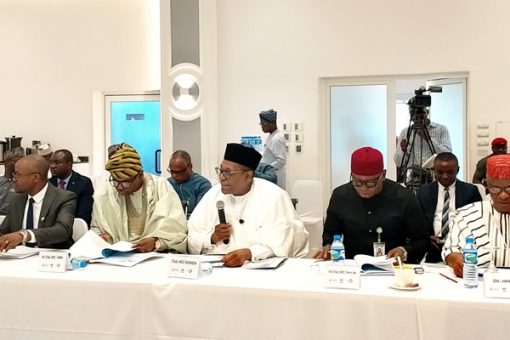
Rising from the 15th Expanded Ministerial Oversight Committee (MOC) meeting held in Abuja on Friday, stakeholders reviewed progress under the country’s health financing reforms, assessed implementation gaps and outlined measures to strengthen primary healthcare delivery.
The BHCPF, established under the National Health Act 2014, remains a major financing mechanism for improving access to essential healthcare services, particularly for poor and vulnerable Nigerians.
The MOC, which provides strategic oversight for the BHCPF and other priority health sector reforms, was attended by representatives of key agencies including the National Health Insurance Authority (NHIA), National Primary Health Care Development Agency (NPHCDA), National Emergency Medical Treatment Committee (NEMTC) and the Nigeria Centre for Disease Control and Prevention (NCDC), alongside development partners and State implementing agencies.
The Coordinating Minister of Health and Social Welfare, Professor Muhammad Ali Pate, said the BHCPF had disbursed about N290.7 billion to implementing gateways over the last three years, from a cumulative allocation of N339 billion, representing about 86 percent release to the agencies responsible for programme delivery.
He said predictable funding remained essential to sustaining uninterrupted primary healthcare services, adding that the 2025 allocation was released in four tranches of N32.88 billion each, while N48.9 billion had so far been received for 2026.
Prof. Pate explained that N32.88 billion had already been disbursed for the first quarter of 2026.
He added that the Office of the Accountant-General of the Federation had confirmed the release of 50 percent of the Consolidated Revenue Fund allocation between January and April 2026.
The Minister also disclosed that Nigeria’s health insurance coverage had increased to 22,025,342 people as of the first quarter of 2026, with the BHCPF accounting for 2,450,204 beneficiaries.
He said more than six million Nigerians had been added to the insurance scheme since the current administration assumed office, increasing coverage from about 15 million people to over 22 million.
“When this administration came, we had about 15 million people covered by health insurance. Today, we have about 22 million. We have added more than six million people in the last three years,” he said.
According to him, the expansion aligns with government efforts to improve financial protection and reduce out-of-pocket healthcare spending.
Prof. Pate further revealed that 8,309 primary healthcare centres had been validated under the programme, with 2,910 facilities achieving Level Two standards, adding that 83.9 percent of assessed facilities recorded quality assessment scores of at least 80 per cent.
On maternal health services, he said deliveries attended by skilled birth attendants increased from 367,185 in the second quarter of 2025 to 419,358 in the fourth quarter, before slightly declining to 414,884 in the first quarter of 2026.
He also disclosed that the Emergency Medical Treatment gateway had expanded from 13 operational States in the first quarter of 2025 to 32 states by the second quarter of 2026, with 35 states onboarded, benefiting more than 130,000 Nigerians since its commencement in 2022.
The BHCPF-supported disease surveillance system, he added, had responded to about 200 public health events since inception, including 35 disease outbreaks recorded through the NCDC gateway in the second quarter of 2026.
The committee also approved the inclusion of private sector actors into the MOC framework to strengthen stakeholder participation and improve governance in health sector decision-making.
It directed the secretariat to communicate with all 36 states on their counterpart funding obligations and equity fund commitments to improve compliance and sustain financing interventions.
Discussions at the meeting focused on accountability, financing sustainability, operational challenges and stronger coordination among institutions implementing health sector reforms under the National Health Sector Renewal Investment Initiative (NHSRII) and Sector-Wide Approach (SWAp).
The Minister said preliminary findings from the 2026 Mini Demographic and Health Survey showed improvements in antenatal care attendance, skilled birth attendance, immunisation coverage, child health and HIV services.
He said the survey was conducted to assess progress ahead of the full national survey in 2028.
Beyond service delivery, Pate said government was strengthening transparency and accountability through collaboration with the Independent Corrupt Practices and Other Related Offences Commission (ICPC), following a memorandum of understanding aimed at improving anti-corruption safeguards within the BHCPF.
He added that efforts were also ongoing to strengthen oversight structures at state and local government levels through improved reporting systems and engagement with the Association of Local Governments of Nigeria (ALGON).
Chairman of the Commissioners of Health Forum and Ekiti State Commissioner for Health, Dr Oyebanji Filani, said States were already experiencing the impact of BHCPF through improved facility coverage, increased reporting and better availability of health workers.
He said the funding had contributed to improved service delivery indicators, including skilled birth attendance, antenatal care coverage and routine immunisation.
“From the State level, we can confirm that the impact of BHCPF has been on the increase,” Dr Filani said.


