

By Muhammad Amaan
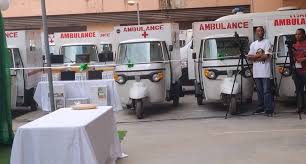
The Federal Government of Nigeria has launched 145 tricycle ambulances and six boat ambulances, as well as emergency communication equipment, to improve access to emergency healthcare services.
The intervention, under the National Emergency Medical Services and Ambulance System (NEMSAS) is targeted at 15 states with the highest burden of maternal and child mortality.
The projects were unveiled during the presidential launch of Federal Ministry of Health and Social Welfare projects held virtually in Abuja as part of activities marking the third anniversary of the administration of President Bola Ahmed Tinubu.
Speaking virtually, the Minister of State for Health and Social Welfare, Dr Iziaq Adekunle Salako, said the intervention was aimed at ensuring that no Nigerian loses his or her life because medical help could not arrive on time.
According to him, the newly commissioned emergency assets are part of broader investments by the Federal Government to strengthen pre-hospital care, improve emergency response systems, and expand access to quality healthcare services nationwide.
Dr Salako said the government also commissioned Emergency Operations Centres in Kano, Sokoto, and Katsina States; the Lagos Vaccine Hub; primary healthcare infrastructure in Delta State; and several tertiary healthcare projects across the country.
Others include the Trauma Centre at Ahmadu Bello University Teaching Hospital, Zaria; the Mental Health Complex at the University of Maiduguri Teaching Hospital; the Infertility and Assisted Reproductive Technology Centre in Bauchi; the Laboratory Complex at the University of Uyo Teaching Hospital; and the President Bola Ahmed Tinubu Complex at the Federal Medical Centre, Abuja.
He disclosed that the ministry had lined up more than 100 projects to mark the administration’s third anniversary, with selected projects from the six geopolitical zones chosen for presidential commissioning.
The Minister explained that the investments align with the Nigeria Health Sector Renewal Investment Initiative aimed at improving maternal and child health, trauma care, mental health services, emergency preparedness, and diagnostic services.
Dr Salako further stated that the Federal Government had expanded health insurance coverage by over 33 percent, revitalised more than 4,000 primary healthcare centres, established 15 new federal tertiary health institutions, and provided over 500 specialist health infrastructure projects within the last three years.
Commissioning the assets on behalf of the Coordinating Minister of Health and Social Welfare, the Permanent Secretary of the ministry, Daju Kachollom, said the ambulances would improve healthcare access and outcomes, particularly in underserved communities.
She explained that the tricycle ambulances would be stationed at primary healthcare centres where trained drivers and nurses would accompany patients during emergencies.
According to her, emergency contact numbers would also be made available to communities to facilitate rapid response, while the six boat ambulances had already been deployed to riverine areas.
In a goodwill message, the National Primary Health Care Development Agency (NPHCDA) described the initiative as a major step toward reducing preventable deaths among mothers, newborns, and vulnerable groups.
Director of Community Health Services at NPHCDA, Dr Nana Abubakar, said the project would strengthen referral systems and improve access to emergency care at the community level.
Meanwhile, the World Bank Task Team Leader for the IMPACT Project, Dr Onoriode Ezire, pointed out that the specially equipped ambulances were fitted with communication gadgets and emergency support facilities capable of stabilising patients while in transit.
He noted that the assets would help bridge healthcare access gaps in remote communities and urged states to ensure proper maintenance and sustainability of the emergency response system.
For the National Coordinator of the National Malaria Elimination Programme (NMEP), Dr Nnenna Ogbulafor, the initiative would support efforts to further reduce malaria prevalence in rural communities.
Citing figures from the latest Malaria Indicator Survey, she said malaria prevalence across the country had dropped from 21% in 2021 to 15% in 2025, indicating a significant decline in the burden of the disease nationwide.


